
Policy Brief October 06, 2026
How should the Ministry invest in TVET reform?


Type: Policy Brief
Date: October 06, 2026
Summary
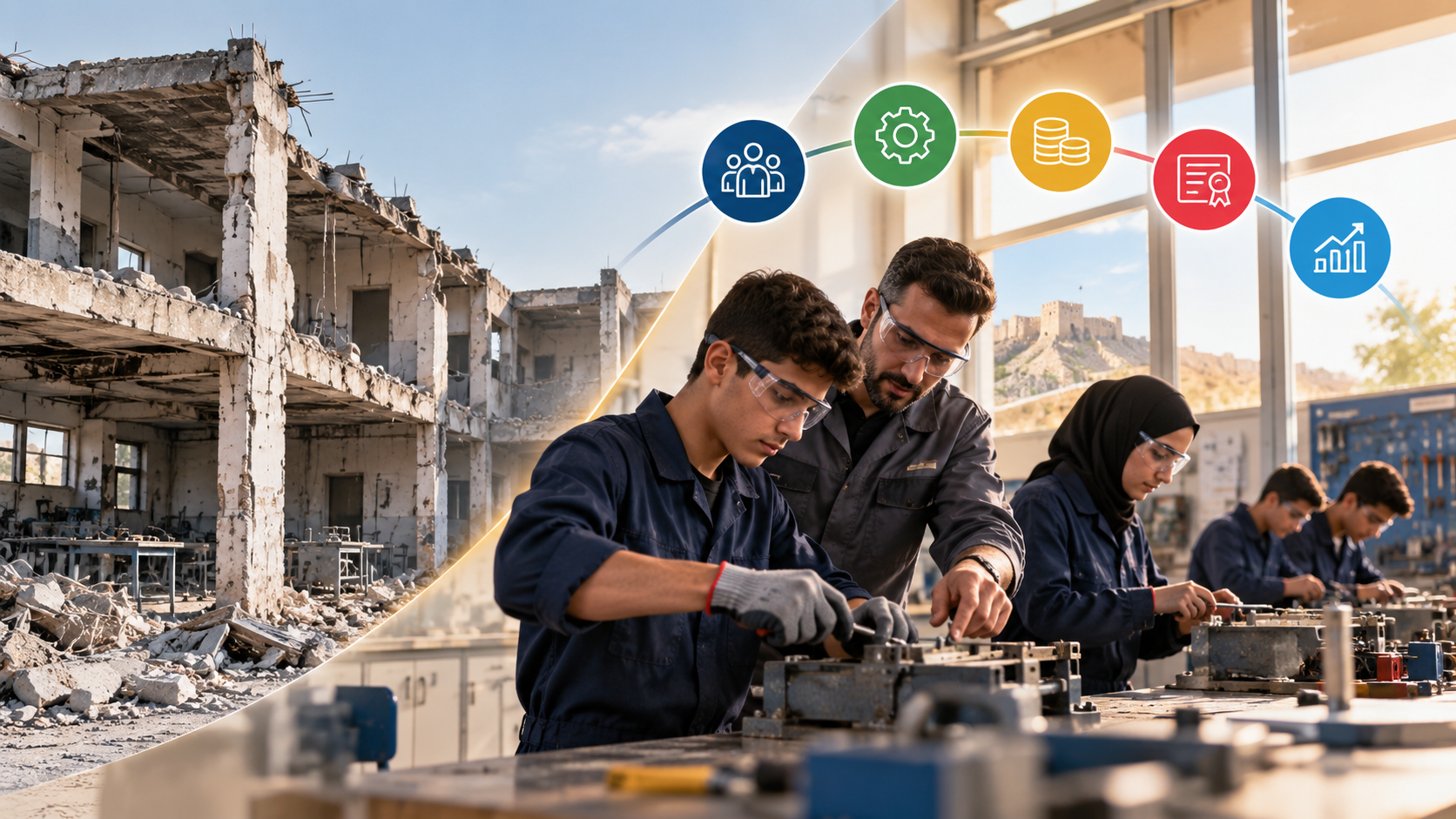
Syria faces an urgent need to restore and strengthen its technical and vocational education and training (TVET) system. With around two-thirds of vocational education institutions damaged or out of service, youth enrolment at only 1.5%, and limited public resources available, the challenge is not simply how much to invest, but where and how investment can deliver the greatest value while preserving flexibility for future needs.
This policy brief proposes a selective, evidence-based approach to TVET investment. It introduces five tests to guide public investment decisions: evidence of demand for skills, student access, the full cost of delivery, whether training leads to a recognised qualification, and whether graduates can progress into employment or further study. Rather than rebuilding institutions simply because they existed before the conflict, the brief argues that investment decisions should be based on whether programmes can respond effectively to current needs and demonstrate practical viability.
The brief considers four delivery models that can be used individually or combined according to conditions in each governorate: rehabilitating existing vocational schools, establishing shared training hubs, expanding dual education with employers, and providing flexible training pathways for workers and out-of-school youth. Each model presents different advantages and trade-offs in terms of access, cost, equipment, employer capacity, quality and responsiveness to changing skills demand.
At the national level, the brief identifies three key decisions for the Ministry: rebuild selectively; establish national standards while allowing delivery models to vary locally; and direct public financing towards viable programmes rather than maintaining institutions regardless of student or employer demand. It also emphasises clear responsibility for implementation, financing, procurement, quality assurance, reporting and review.
Finally, the brief proposes a three-phase implementation pathway over five years. The approach begins with assigning responsibilities, completing a national survey and selecting assessed pilot sites; moves into addressing staffing and curriculum gaps and testing different delivery and access measures; and ultimately makes models permanent only where evidence demonstrates that they meet the five investment tests.
Centre team behind the work
Kouteba Alkhalil
Education Practice Lead
Alaa Zaza
Manager